Construction Progress Photography by Drone in Quebec (2026)

A general contractor building a 48-unit rental project in Vaudreuil-Dorion doesn't need one dramatic photo when the building is finished. They need a dated record of the site every few weeks — footings, framing, envelope, rough-in, substantial completion — because that's what a lender's draw inspector, a municipal inspector, or a subcontractor dispute actually asks for.
That's a different job than a single real estate listing shoot, and it's one more builders, developers and project managers in this region are booking as multi-unit construction activity picks up across Quebec. Here's what drone progress photography actually documents, what's driving demand for it in Vaudreuil-Soulanges, the West Island and Greater Montreal right now, what it costs, and when a single milestone shoot is enough instead.
Key Takeaways
- Quebec's construction industry logged 216 million hours worked in 2025, among the highest totals on record, with April 2026's annualized pace running at 216.8 million hours and roughly 136,500 active workers (Commission de la construction du Québec, Perspectives 2026 and monthly statistics).
- Montreal's census metropolitan area posted a 21% year-over-year increase in actual housing starts in April 2026, driven by higher multi-unit construction — part of a pattern of double-digit monthly gains through the first half of 2026 (CMHC, Monthly Housing Starts data).
- Quebec's urban centres of 10,000+ residents recorded 16,150 housing starts from January through April 2026, up 13% year-over-year, with the large majority of early-2026 starts being rental or multi-unit projects (APCHQ, April 2026 economic bulletin).
- The Hôpital Vaudreuil-Soulanges project — a $2.595-billion investment adding 404 net new beds, under construction in this market with first patients expected in summer 2028 — is a visible example of the kind of multi-year build where dated progress documentation matters to more than one stakeholder (Government of Canada, July 2026 announcement).
- Drone progress photography is typically billed as a recurring package rather than a one-time shoot, priced in a similar per-visit range to the $150–400 drone add-on used elsewhere in this market, scaled to flight frequency and site size.
Why a Single "Before and After" Photo Isn't Enough
Real estate drone photography answers one question: what does this finished property look like from above. Construction progress photography answers a different one, repeated over months: what did this site look like on this date, and how does that compare to two weeks ago, or two months ago. A lender's draw schedule, a general contractor's weekly subcontractor meeting, and a condo board tracking a renovation all need the same thing — a consistent, dated, comparable visual record, not a single hero shot.
Ground-level photos can't do this reliably on a multi-unit or commercial build. A phone photo from the sidewalk shows one elevation on one day. A drone flight from the same launch point, at the same altitude and angle, on a repeating schedule, builds a record where each flight can be compared directly to the last — which is the entire point of progress documentation.
Why There's More of This Work in Quebec Right Now
Quebec's construction industry has been running at a historically high level of activity. The Commission de la construction du Québec's Perspectives 2026 report recorded 216 million hours worked across the province's construction industry in 2025 — among the highest annual totals the CCQ has tracked. The CCQ's monthly statistics show that pace continuing into 2026: for April 2026, the annualized, seasonally adjusted figure stood at 216.8 million hours, with roughly 136,500 active workers and 15.8 million gross hours worked that month alone.
Housing specifically has been a big part of that activity. CMHC's monthly housing starts data shows Montreal's census metropolitan area posting double-digit year-over-year increases in actual starts across multiple months of 2026 — including a 21% increase in April, driven specifically by higher multi-unit construction. The Association des professionnels de la construction et de l'habitation du Québec's April 2026 bulletin put it in sharper terms for the province as a whole: 16,150 housing starts in Quebec's urban centres of 10,000 or more residents from January through April 2026, up 13% from the same period in 2025, with the large majority of those early-2026 starts being rental or multi-unit projects rather than single detached homes.
Locally, the clearest example of a long-duration project that this kind of documentation fits is the Hôpital Vaudreuil-Soulanges, a $2.595-billion investment adding 404 net new beds, under construction in this market with the Société québécoise des infrastructures as project manager and Pomerleau as design-build contractor; first patients are expected in summer 2028. Group PV Media has no role on that project — it's referenced here only as a visible, public example of the scale and duration of build this region now has underway, the kind of multi-year site where a dated photo record genuinely matters to lenders, inspectors and the public, not because of who's photographing it.
What Drone Progress Photography Actually Documents
A useful progress-photography program isn't random overhead shots — it's a repeatable set of angles captured on a consistent schedule, so each flight can be compared to the last:
- Site preparation and excavation: grading, footings and foundation work before anything is visible from the street
- Framing and structural progress: floor-by-floor or phase-by-phase advancement on a multi-unit build
- Building envelope: roofing, cladding and window installation as the exterior closes in
- Site logistics: material staging, equipment positioning and access routes — useful for scheduling and safety review, not just marketing
- Milestone completion: substantial completion, landscaping and final grading for sign-off documentation
Flown from the same launch point and altitude each time, that sequence becomes a visual timeline a project manager, lender or municipal inspector can scan in minutes instead of digging through a folder of inconsistent ground photos.

Who Actually Books This — and Why
Picture a developer financing a 20-unit townhouse project through a construction lender. The lender's draw schedule releases funds in stages, and each draw request typically needs visual proof that the corresponding phase is actually complete — not just an invoice. A dated drone photo set, timestamped and consistent flight-to-flight, gives the developer something faster to produce than scheduling a site visit for every draw, and gives the lender something more complete than a handful of phone photos. That's a hypothetical scenario, not a specific client engagement, but it's the exact kind of use case that drives recurring bookings in this market.
The same logic applies to a few other common situations:
- General contractors managing subcontractor schedules, who use weekly or biweekly flights to document what's actually been completed before the next trade arrives
- Developers marketing pre-sale units in a condo or townhouse project, who use progress photos to show buyers a project is moving even before it's ready for a traditional real estate shoot
- Municipalities and permit processes that request dated photo evidence of specific construction milestones
- Anyone managing a dispute or warranty question down the line, where a dated photo record of what was actually built, and when, is the kind of evidence that's far easier to produce if it already exists than to reconstruct after the fact
Construction teams elsewhere already treat this as routine. The trade publication For Construction Pros quotes a project team at Rogers-O'Brien Construction, a Texas-based general contractor, describing weekly drone flights for progress photos on most of their projects, with some sites flown daily during active phases. That's a U.S. contractor's practice, not a Quebec statistic, but it reflects the same logic that applies here: the value comes from the schedule being consistent, not from any single flight.
How Often to Fly, and What It Costs
Flight frequency should match project phase and pace, not a fixed calendar:
- Weekly or biweekly during active framing and envelope work on a multi-unit or commercial build, when visible change happens fast
- Monthly during slower phases like interior finishing, or on smaller residential renovation projects
- At defined milestones only — foundation complete, framing complete, substantial completion — for smaller projects or lender draw schedules tied to specific phases rather than a calendar
Pricing in this market is typically structured as a recurring package rather than a single invoice, with per-visit cost falling in a similar range to the $150–400 drone photography add-on used for real estate and commercial aerial work here, scaled by flight frequency, site size and how far the property sits from the pilot's base. A project booking biweekly flights over a six-month build pays substantially less per flight than a one-off shoot, since the launch point, flight plan and post-processing workflow are already established after the first visit.
Certification Still Applies — It Doesn't Change for a Job Site
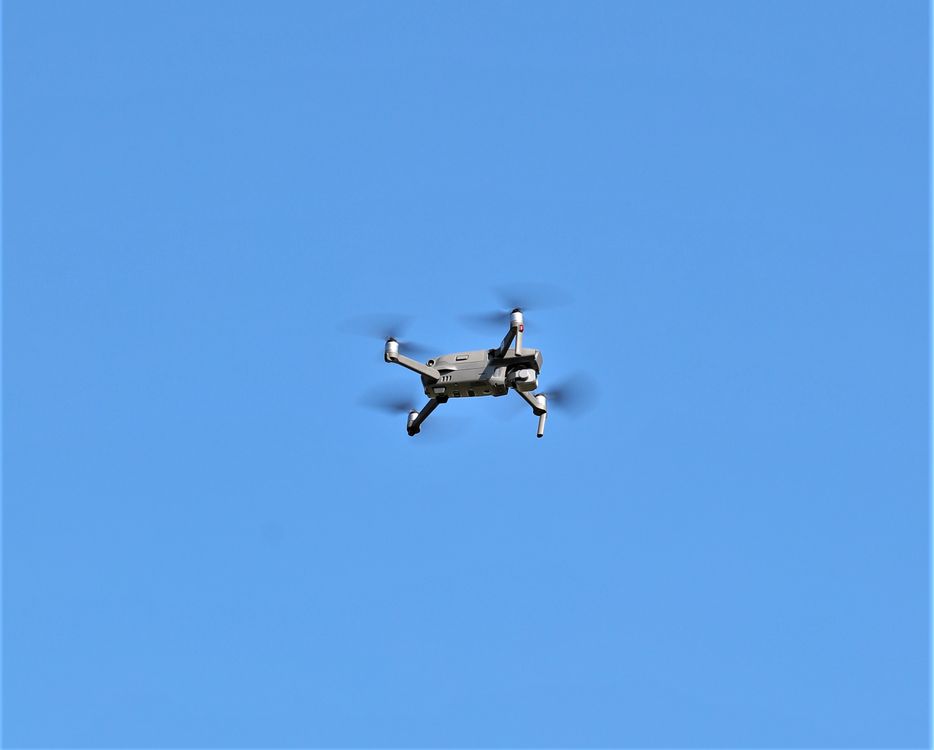
A recurring progress-photography program is still commercial drone operation under the same Transport Canada rules that apply to a single real estate flight: a certified pilot, a registered aircraft, a pre-flight site assessment and liability insurance. Active job sites add their own wrinkle — cranes, overhead lines and crews working below the flight path all need to factor into the flight plan, which is exactly why this isn't a job for an uncertified operator with a consumer drone. For the full breakdown of certification tiers and what a compliant operator should be able to show you, see our Quebec drone photography guide.
When a Single Shoot Is Enough
Not every project needs a recurring program. A full progress-photography package is usually overkill for:
- Small residential renovations with a short timeline, where one or two milestone photos cover what's actually needed
- Projects with no external stakeholder requiring draw inspections, permit documentation or investor updates
- A single marketing moment — like a groundbreaking photo or a near-completion shot for a listing — rather than an ongoing record
For a finished commercial or industrial property being marketed to tenants or buyers rather than documented during construction, our guide to drone photography for commercial and industrial real estate covers that shot list and pricing instead. If the flight is about documenting storm or ice damage after a build is already finished rather than tracking progress during one, our guide to drone roof inspections for storm damage covers that separate situation. And for contractors who want video content for their own marketing rather than documentation for lenders or permits, our guide to video marketing for renovation contractors covers that separate use case.
A Practical Progress-Photography Checklist
- Set a fixed launch point and altitude for the first flight, and repeat it every time — consistency is what makes the series useful, not any individual photo
- Match frequency to project phase, not a flat schedule — weekly or biweekly during fast-moving framing and envelope work, monthly or milestone-only during slower phases
- Confirm the pilot holds current Transport Canada certification and liability insurance before the first flight, and ask for proof
- Request dated, organized delivery — a folder structure by date or milestone is far more useful later than a single unsorted batch of images
- Loop in your lender, condo board or permit office early if the documentation needs to satisfy a specific requirement, so the flight schedule actually matches what they need to see
Frequently Asked Questions
How often should a construction site be photographed by drone?
It depends on the phase. Weekly or biweekly flights make sense during active framing and envelope work when visible progress happens fast; monthly or milestone-only flights are usually enough during slower interior-finishing phases or on smaller projects.
How much does drone progress photography cost for a construction project?
It's typically billed as a recurring package rather than a single shoot, with per-visit pricing in a similar range to the $150–400 drone add-on used elsewhere in this market, scaled by flight frequency and site size. A recurring booking generally costs less per flight than a one-off shoot.
Do lenders actually require drone progress photos for construction draws?
Requirements vary by lender and project, but many construction loans tie draw releases to verified completion of specific phases, and a dated, consistent photo record is one of the easier ways to document that a phase is actually done.
Does a drone pilot need special certification to fly over an active construction site?
The same Transport Canada commercial certification, aircraft registration and liability insurance required for any commercial drone flight in Canada applies here. Active sites add planning considerations — cranes, overhead lines and crews working below — that a certified operator accounts for in the flight plan.
Is drone progress photography worth it for a small renovation?
Usually not as a recurring program. A small residential renovation with a short timeline and no external stakeholder requiring draw inspections or permit documentation typically only needs one or two milestone photos rather than an ongoing series.
Managing a multi-unit, commercial or institutional build in Vaudreuil-Soulanges, the West Island or Greater Montreal? Group PV Media flies Transport Canada certified, fully insured drone progress photography on a schedule built around your project's phases. Contact us for a fast quote.
About the author
Pranshu Verma is the founder of Group PV Media, a social media marketing and content production company serving small businesses across Vaudreuil-Soulanges, the West Island, Saint-Lazare, Montreal, and Laval, Quebec.
Want to apply this to your business?
Book a free 30-minute call. We’ll look at your situation together and you’ll leave with a clear plan — no commitment.
Book a free consultation