Virtual Staging Rules and Costs in Quebec (2026)
In February 2026, a Quebec real estate agency found itself publicly apologizing after an AI tool altered the facade of a home in its own listing photos, producing an exterior that didn't match the property buyers would actually walk up to. The story, reported by CP24, became a quick, real-world case study in exactly where digital photo editing crosses a line in this market: not in using the technology, but in using it without telling anyone.
Virtual staging sits on the other side of that line, when it's done right. Digitally furnishing an empty room, removing clutter, or showing how a space could look with furniture in it is legal, common, and increasingly standard in Quebec real estate marketing. But Quebec's real estate regulator has been explicit about what separates legitimate virtual staging from the kind of photo manipulation that got the agency above into trouble: disclosure. This guide covers what virtual staging actually is, what Quebec's OACIQ expects sellers and brokers to disclose, what the practice costs, and when it's actually worth using on a listing in Vaudreuil-Soulanges, the West Island, or anywhere else in this market.
Key Takeaways
- OACIQ, Quebec's real estate brokerage regulator, says it supports AI-assisted images "provided it is used in an ethical and transparent manner," and that any image generated or retouched with AI, including virtual staging, must be clearly indicated rather than presented as the room's real condition (OACIQ, via CP24, February 2026).
- In February 2026, a Quebec real estate agency publicly apologized after an AI tool altered a home's facade in listing photos without disclosure — a concrete, local example of what OACIQ's disclosure requirement is meant to prevent (CP24, February 12, 2026).
- In the U.S. National Association of Realtors' 2025 Profile of Home Staging, 83% of buyers' agents said staging made it easier for buyers to picture a property as their own home. That's U.S. survey data about staging broadly, not a Quebec-specific or virtual-staging-only figure (NAR, 2025).
- Quebec's brokerage advertising regulation (Regulation respecting brokerage requirements, professional conduct of brokers and advertising, c. C-73.2, r. 1) requires that a broker's advertising and property descriptions not mislead the public about a property's actual condition.
- There's no single standardized per-room virtual staging rate published for this market worth citing; cost scales with how many rooms need staging, turnaround time, and whether a provider bundles it with a photography shoot.

What Virtual Staging Actually Is (and Isn't)
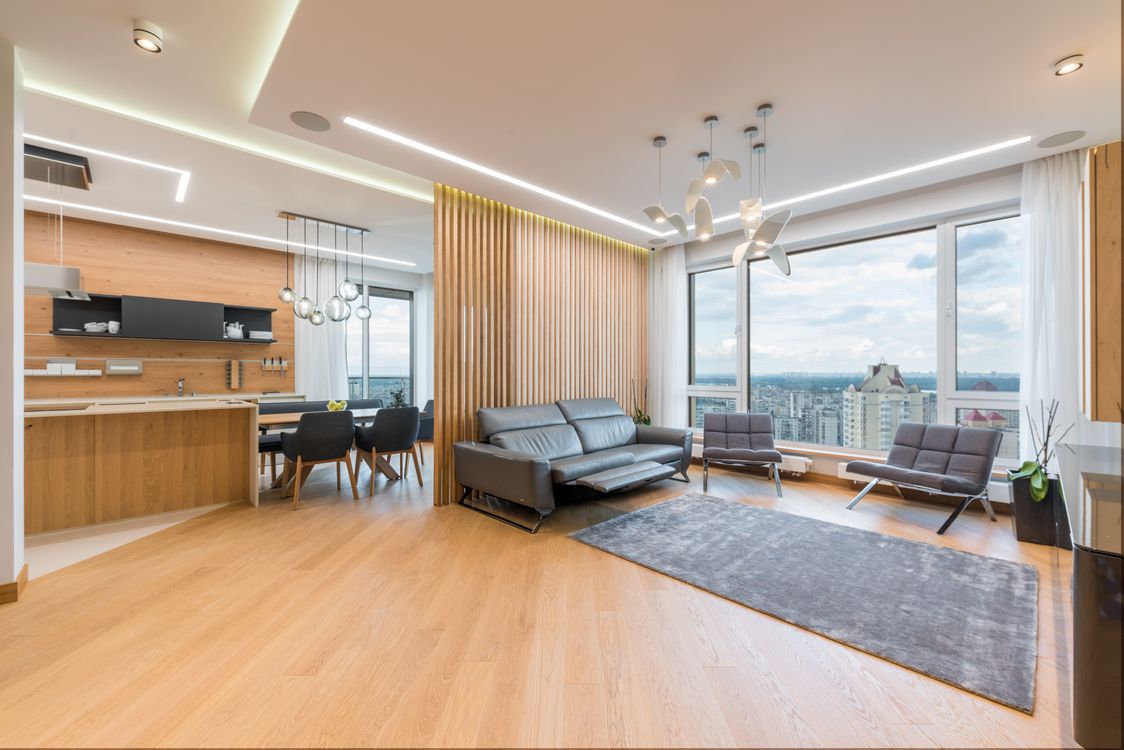
Virtual staging is digital editing applied to a real photo of a real room: adding furniture, decor, or finishes to an empty or sparsely furnished space so buyers can picture how it would look lived-in. A vacant living room becomes a photo with a sofa, rug, and coffee table added in post-production. Nothing about the room's actual walls, windows, layout, or square footage changes; only what's placed inside it changes, and only in the image.
That's a different category of edit than what happened in the February 2026 case above, where an AI tool altered the facade itself, a permanent, structural feature of the property that a buyer would see unchanged on a showing. Furnishing an empty room digitally doesn't mislead a buyer about what they're buying, provided it's disclosed. Changing how a roofline, siding, or exterior actually looks does mislead a buyer, disclosed or not, which is a separate problem from staging altogether. The distinction matters because it's exactly the line OACIQ draws between acceptable and unacceptable use of AI in listing photos.
What OACIQ Requires You to Disclose
OACIQ, the Organisme d'autoréglementation du courtage immobilier du Québec, regulates how real estate brokerages in this province advertise and represent properties. Following the February 2026 incident, OACIQ's public position, reported by CP24, was direct: the organization says it supports the use of AI in real estate marketing "provided it is used in an ethical and transparent manner," and that "if an image is generated or retouched using AI, this must be clearly indicated." Just as pointedly, OACIQ stated that AI "should never be used to modify or conceal anything that could mislead the public."
That guidance lines up with Quebec's existing brokerage advertising regulation, the Regulation respecting brokerage requirements, professional conduct of brokers and advertising (c. C-73.2, r. 1), which requires a broker's advertising and property descriptions to reflect the property accurately rather than mislead a buyer about its actual condition. In practice, that means a virtually staged photo needs a visible label, either a watermark on the image itself or a note in the listing remarks, identifying it as virtually staged rather than letting a buyer assume the furniture shown is actually in the home. It's the same disclosure principle covered in our broader guide to real estate photography costs and prep in Vaudreuil-Soulanges, which touches on Centris's expectation that listing photos represent a property as it currently exists.
The practical risk of skipping disclosure isn't hypothetical. OACIQ has said any practice that provides false, misleading or incomplete information to the public can result in disciplinary measures, and a buyer who feels misled by a listing's photos can file a complaint with OACIQ's information centre. A clearly labeled virtual staging photo carries essentially none of that risk; an unlabeled one does, regardless of how good the final image looks.
What the Research Says About Staging's Effect on Buyers
The strongest available research on staging's effect on buyers comes from the U.S. National Association of Realtors' 2025 Profile of Home Staging, a survey of REALTORS conducted in February 2025. It's worth stating plainly: this is U.S. data about staging broadly, physical and virtual combined, not a Quebec-specific study and not a figure isolated to virtual staging on its own. Read it as evidence that staging in general changes how buyers respond to a listing, not as a Quebec market statistic.
With that caveat in place, the findings are directionally useful. Eighty-three percent of buyers' agents in the NAR survey said staging a home made it easier for a buyer to picture the property as their own future home. Sixty percent said staging had an effect on some buyers, and a further 26% said it affected most buyers' view of a listing. Separately, 21% of sellers' agents reported staging every home they listed, while another 10% said they staged only homes that were proving difficult to sell, suggesting staging is often reached for specifically when a listing isn't performing.
Separately, NAR's own reporting on AI-enhanced listing photos has flagged the same disclosure concern OACIQ raises: an article published on nar.realtor, titled "Using AI to Enhance Listing Photos Can Be Legally Risky," warns that undisclosed AI edits to listing photos can expose a broker to misrepresentation claims in the U.S. market. The specific legal mechanisms differ between Quebec and U.S. jurisdictions, but the underlying caution, that disclosure is what separates a defensible edit from a liability, is the same lesson OACIQ is applying here.
When Virtual Staging Is Worth It for a Quebec Listing, and When It Isn't
Virtual staging earns its cost on a specific set of listings, not every one. It helps most for a vacant home where empty rooms photograph as cold and hard to judge for scale, a new-construction pre-sale where no furniture exists yet for buyers to picture rooms in use, and an awkwardly shaped room, a bonus space, a loft, an oddly proportioned basement, where buyers often can't tell from an empty photo what the space is actually for. That's also exactly the situation where rising listing inventory makes photo quality matter more, since a vacant or under-furnished home is competing against staged and lived-in listings for the same buyer's attention.
It earns less of a return, and arguably shouldn't be used at all, on a home that's already furnished and well-presented. Real photos of a home's actual, well-styled furniture are a stronger signal to a buyer than any staged alternative, since nothing needs explaining or disclosing. It's also not the right tool for hiding a property's real condition, a cracked wall digitally smoothed over, a cramped room digitally made to look larger than its real footprint, since that crosses directly into the kind of misleading edit OACIQ has flagged as a problem rather than a marketing choice.
Virtual Staging vs. Physical Staging
The two aren't interchangeable, and the right call depends on the listing:
| Factor | Virtual staging | Physical staging |
|---|---|---|
| What a buyer sees at a showing | The actual empty or current room, unchanged | The actual furnished room, matching the photos |
| Disclosure requirement | Must be labeled as virtually staged under OACIQ guidance | None; the furniture shown is physically present |
| Turnaround | Digital edit, no on-site visit required beyond the photo shoot | Requires delivery, setup and removal of real furniture |
| Best use case | Vacant homes, pre-sales, awkward or hard-to-read rooms | Listings staying on the market long enough to justify rental furniture, or homes being actively shown furnished |
The gap between what a photo shows and what a buyer sees at the door is the reason disclosure matters as much as it does. A buyer who books a showing expecting the furnished room from the photo and arrives at an empty space hasn't just been mildly surprised; they've had the listing's credibility undermined before the showing even starts, which is a worse outcome for a seller than a plainly labeled staged photo would ever cause.
What Virtual Staging Costs and How the Process Works
There's no single reliable, published per-room rate for virtual staging specific to the Quebec market worth citing here, and guessing at one would do readers a disservice, the same honest answer that applies to real estate photography pricing generally in this region. What drives the price for any given job is straightforward: the number of rooms being staged, how quickly the finished images are needed, and whether the work is bundled with a photography shoot or ordered separately after the fact.
The process itself is simple from a seller's side. A photographer shoots the empty or under-furnished rooms as part of a standard listing shoot, flags which images need staging, and a digital artist or software tool adds furniture, decor and finishes to those specific photos in post-production. The original, unstaged photo typically stays available too, since some agents choose to publish both: the real photo for accuracy and the staged version, clearly labeled, to help buyers picture the room furnished. Turnaround is usually measured in days rather than weeks, since it's a digital edit layered onto photos that have already been shot rather than a separate site visit. For sellers weighing this against the cost of a listing that sits, our guide to selling a Vaudreuil-Soulanges home in 2026 covers the broader case for investing in listing media before going live.

A Disclosure Checklist for Quebec Sellers and Agents
- Label every virtually staged image, either as a watermark on the photo itself or a clear note in the listing remarks, rather than presenting it as the room's current state
- Keep the original, unstaged photo on file so it can be provided if a buyer or OACIQ ever asks to compare it with the published version
- Never use AI or digital editing to alter a property's permanent features, exterior facade, structural elements, room dimensions, since that's a misrepresentation issue separate from staging altogether
- Brief your photographer or staging provider on which rooms are being staged before the shoot, so the unstaged versions of those specific photos are captured cleanly
- When in doubt, over-disclose rather than under-disclose; a buyer who notices a staged room that wasn't labeled loses trust in the whole listing, not just that one photo
Frequently Asked Questions
Is virtual staging allowed for real estate listings in Quebec?
Yes. OACIQ has said it supports the use of AI-assisted images, including virtual staging, provided it's used ethically and transparently, with any AI-generated or retouched image clearly indicated rather than presented as the room's real condition.
Do I have to disclose that a listing photo was virtually staged?
Yes. Under OACIQ's guidance, any image generated or retouched with AI, including virtual staging, needs to be clearly flagged, typically with a label on the photo or a note in the listing remarks, rather than presented as the room's actual furnished state.
What happened with the Quebec AI listing photo in February 2026?
A Quebec real estate agency publicly apologized after an AI tool altered a home's facade in its listing photos without disclosure, a story reported by CP24. It's a concrete example of the difference between disclosed virtual staging, furnishing an empty room, and undisclosed alteration of a property's actual condition, which OACIQ treats as a misleading-advertising problem.
Does virtual staging actually help a listing sell faster?
The clearest available research is the U.S. National Association of Realtors' 2025 Profile of Home Staging, where 83% of buyers' agents said staging made it easier for buyers to picture themselves in a home. That's U.S. data about staging broadly, not a Quebec-specific or virtual-staging-only figure, but it supports the same underlying reasoning: a buyer who can't picture a room furnished is less likely to request a showing.
When should I skip virtual staging for my Quebec listing?
Skip it for a home that's already furnished and well-presented, since real photos of real furniture are a stronger signal than any staged alternative. It's most useful for vacant homes, new-construction pre-sales, and awkward or hard-to-read empty rooms where buyers struggle to judge scale and function.
Conclusion
Virtual staging itself isn't the issue OACIQ has raised, undisclosed AI editing is. The February 2026 case of an altered facade shows what happens when that line gets crossed, and OACIQ's response, that AI-assisted images are welcome as long as they're clearly labeled and never used to hide a property's real condition, gives sellers and agents a clear standard to work from. A vacant home, a pre-sale unit, or an oddly shaped room are exactly the situations where a clearly labeled staged photo helps a buyer see potential that an empty room photo doesn't communicate on its own.
Thinking about virtual staging, photography, or drone coverage for a listing in Vaudreuil-Soulanges, the West Island, Saint-Lazare, Montreal or Laval? Contact Group PV Media for a quote built around what your specific listing actually needs.
About the author
Pranshu Verma is the founder of Group PV Media, a photography, drone, and video production company serving real estate agents and sellers across Vaudreuil-Soulanges, the West Island, Saint-Lazare, Montreal, and Laval, Quebec.
Want to apply this to your business?
Book a free 30-minute call. We’ll look at your situation together and you’ll leave with a clear plan — no commitment.
Book a free consultation