Video Marketing for Montreal Restaurants (2026)
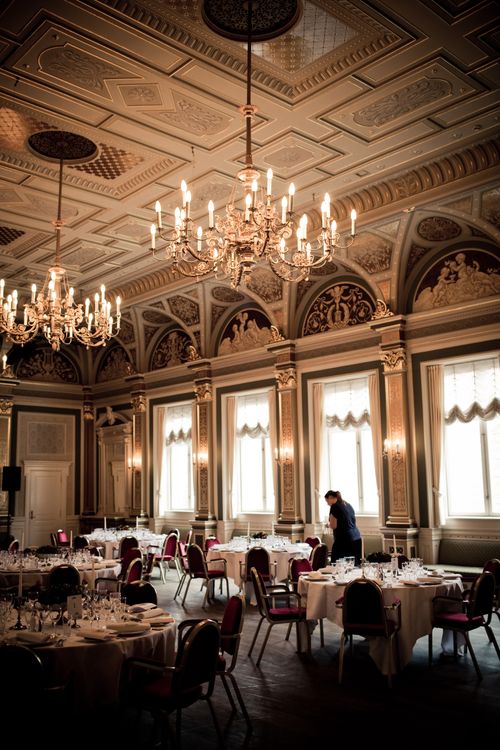
Walk down Boulevard Saint-Laurent through the Mile End on a Friday night and the sidewalk still looks busy — patios full, a small lineup outside a spot on Bernard. Look behind that scene at what has actually been happening to Canada's restaurant industry over the past two years, though, and the picture is rougher than the sidewalk suggests. Rents are up, food costs are up, and a meaningful share of operators are running at break-even or worse. In a market like that, the restaurants pulling ahead are rarely the ones with the best food alone — they're the ones a hungry Montrealer already saw on their phone before they ever walked in.
This guide is about video specifically for Montreal's restaurant and café scene: what the current market pressure actually means for marketing, what to film with almost no budget, where it should be posted, and what a professional shoot costs when the footage is worth getting right.
Key Takeaways
- Canada lost roughly 7,000 restaurants on a net basis in 2025, and an early-2026 report projected a further 4,000 net closures in 2026 — though a mid-2026 follow-up from the same research group said that forecast now looks too pessimistic (Dalhousie University's Agri-Food Analytics Lab, cited by Global News, January 2026, updated later that year). This is a Canada-wide figure, not a Montreal-specific count.
- 41% of Canadian restaurant operators were losing money or merely breaking even as of that mid-2026 update, up from 36% just months earlier — again national data, not a Montreal number specifically.
- 91% of businesses used video as a marketing tool in 2026, and 85% of people say a video has convinced them to buy a product or service (Wyzowl, State of Video Marketing 2026, a global survey skewed toward US and UK respondents).
- Quebec ranks among Canada's top two provinces for small-business "digital leadership," and 41% of Canadian small businesses already use Instagram versus fewer than one in ten on TikTok — national data with a provincial breakout, not Montreal-only (CFIB, Your Voice survey, September 2025).
- Most Montreal-area video shoots run in the same $600 to $3,500 CAD range as the rest of the Quebec market, depending on scope.
Montreal's Restaurant Scene Is Under Real Pressure in 2026
The numbers behind Canada's restaurant industry have been genuinely bad, and it's worth being precise about what's confirmed versus what's still shifting. Dalhousie University's Agri-Food Analytics Lab, whose food-industry research is widely cited across Canadian media, found that the country lost roughly 7,000 restaurants on a net basis in 2025. An early-2026 report from the same lab, covered by Global News in January 2026, projected Canada could lose a further 4,000 restaurants on net in 2026. A follow-up from the lab published later that year walked that specific projection back as too pessimistic — but it also found that 41% of operators were losing money or merely breaking even, up from 36% just months earlier. Both figures are national, not a Montreal-specific count, and neither is a Montreal restaurant census — but Montreal isn't exempt from the cost pressure driving them: rent, food costs and labour have all climbed here too.
That pressure changes the marketing math for a Montreal restaurant. A few years ago, a good location and word of mouth could carry a room. In a market where a meaningful share of operators are barely breaking even, the cost of failing to show up where diners are actually deciding where to eat — their phone, five minutes before they leave the house — is higher than it used to be. Video is the one lever in that mix that doesn't require another line of credit.
Why Video Specifically, Not Just "More Marketing"
The case for video generally is no longer subtle. Wyzowl's State of Video Marketing 2026 survey, its twelfth annual edition, found that 91% of businesses used video as a marketing tool that year, and 85% of people said a video had convinced them to buy a product or service at some point. That survey is global and skews toward US and UK respondents, so it isn't Quebec-specific data — but the direction lines up with what's visible locally: more small businesses treating video as standard, fewer treating it as optional.
Where it gets more specific to this market is adoption. The Canadian Federation of Independent Business ran a Your Voice survey in September 2025, drawing responses from more than 2,400 independent business owners across Canada, and found that Quebec was one of the two provinces — alongside Ontario — with the highest share of small businesses classified as "digital leaders." The same survey found 78% of small businesses had a company website, 59% used Facebook, 52% used a Google Business Profile, and 41% used Instagram — but fewer than one in ten had adopted TikTok. That's national data with a provincial breakout, not a Montreal figure specifically, but it points to a real gap: Instagram adoption is well ahead of TikTok among Canadian small businesses generally, which for a restaurant scene as visually driven as Montreal's is likely leaving reach on the table.
What a Montreal Restaurant Should Actually Film
None of this requires a production budget a squeezed restaurant doesn't have. It requires showing the specific things a diner is already trying to picture before they book a table or walk in:
- The plate reveal: a slow, close pass over a signature dish as it leaves the pass — the single highest-performing clip type for restaurants on Instagram and TikTok, and the easiest to shoot with nothing but a phone and a window's worth of light.
- Behind the pass: 20 to 40 seconds of the kitchen mid-service — a line cook plating, steam off a pan, the espresso machine running. It's the same footage a customer would see if they were allowed to stand in the kitchen, which is exactly why it works.
- The owner or chef, on camera, briefly: one sentence about why a dish is on the menu, or what changed for the fall menu, builds more trust than any caption. A face behind a restaurant name matters more in a market with this much competition, not less.
- Real customer reactions: a genuine first-bite reaction from a regular, filmed with their permission, does more for a Montreal audience than a five-star review with no face attached. Never stage this as a scripted testimonial — the entire value is that it reads as unplanned.
- Neighbourhood and seasonal tie-ins: a market run at Jean-Talon before service, a terrasse opening in May, a first-snow shot through the front window — footage that ties a restaurant to the calendar Montrealers are already living on, and that keeps working every time that season comes back around.
Picture a small Villeray bistro that starts posting one 20-second plate reveal and one kitchen clip a week, tagged to the neighbourhood, instead of a single static menu photo a month. That's not a documented case study — it's a hypothetical, offered only to illustrate the kind of shift in posting habit this section is describing — but it's the exact behavior change that separates the restaurants with an active feed from the ones still running on a five-year-old logo photo.
Where the Video Should Actually Live
Production only matters if the footage reaches someone deciding where to eat tonight:
- Instagram Reels, first: this is where Montreal diners are already scrolling, and it's the format the platform currently rewards with the most reach for a new or small account.
- Google Business Profile: a short video attached to your listing gives someone searching a specific dish or neighbourhood something more convincing to tap than a stock photo — and per CFIB's numbers above, more than half of Canadian small businesses already maintain this profile, so a restaurant without one is behind before video even enters the picture.
- TikTok, selectively: adoption among Canadian small businesses is still under one in ten, which is exactly the kind of gap that rewards an early mover in a food-obsessed city — but it only pays off with consistent posting, not a single upload.
- Facebook, for an older or more established regular base: still the platform where a long-running neighbourhood spot's most loyal customers are most likely to see an update.
Post bilingually where it counts. A caption in French only, or English only, leaves out part of the Montreal audience actually deciding between your restaurant and the one two doors down — a short bilingual caption or two versions of the same clip costs almost nothing next to the value of reaching both audiences.
DIY or Professional: A Practical Way to Decide
| Situation | A phone is usually enough | Call a professional |
|---|---|---|
| Weekly plate reveal or kitchen clip | Yes — natural light and a steady hand carry this further than most owners expect | Not necessary |
| A menu launch or seasonal relaunch | Only in a pinch | Recommended — this footage gets reused for months |
| A brand or "about us" video for your website | Not recommended | Recommended — lighting and audio decide whether it reads as credible |
| Paid Instagram or Facebook ad creative | Rarely performs well | Recommended — polish measurably affects how many people stop scrolling |
| Customer testimonial you'll reuse long-term | Only as a backup | Recommended — audio clarity is what makes a testimonial believable |
Unpolished, phone-shot clips often outperform slicker ones for routine weekly content precisely because they read as authentic — a plated dish or a kitchen moment doesn't need a lighting kit. Bring in a professional video production crew for anything with real stakes behind it: a full brand video, a testimonial series meant to last a year, or any footage that will run behind paid ad spend.

What It Costs in Montreal
Video production for a Montreal restaurant runs in the same general range as the rest of the Quebec market: most projects fall between $600 and $3,500 CAD before tax, depending on scope. A half-day shoot built around a handful of short social clips — plate reveals, a kitchen pass, a brief owner intro — sits at the lower end. A scripted brand video, a full menu relaunch shoot, or a testimonial series with professional audio sits toward the higher end. See our Video Production Quebec pillar guide for the full cost breakdown by video type and shoot complexity.
For a restaurant that also wants updated interior or food photography alongside video, combining both into a single visit is almost always more efficient than booking separate vendors on separate days, since the crew is already on-site with the same lighting setup. And if your restaurant's marketing needs go beyond video into an ongoing content calendar, our Social Media Marketing pillar guide covers platform strategy, posting cadence and budgeting in more depth. For the consumer-facing playbook this guide draws on, adapted for a broader range of local businesses, see our companion post, Video Marketing for West Island Businesses in 2026.
Frequently Asked Questions
How much does video production cost for a Montreal restaurant?
Most Montreal restaurant video projects fall between $600 and $3,500 CAD before tax, depending on the number of clips, whether professional audio is needed, and how much editing is involved. Contact Group PV Media for a quote scoped to your restaurant.
What should a Montreal restaurant film first?
Start with a plate reveal and a short kitchen clip — the two lowest-cost, highest-performing formats for a restaurant, shootable with a phone and natural light. Add a brief owner or chef introduction once those are running consistently.
Is Montreal's restaurant industry actually struggling in 2026?
Canada lost roughly 7,000 restaurants on a net basis in 2025, and a mid-2026 update found 41% of operators were losing money or merely breaking even, according to Dalhousie University's Agri-Food Analytics Lab. Both figures are national rather than Montreal-specific, but the cost pressures behind them — rent, food and labour costs — apply locally too.
Should a Montreal restaurant prioritize Instagram or TikTok?
Start with Instagram Reels, since that's where Canadian small-business adoption is already well ahead of TikTok, according to CFIB's September 2025 survey. TikTok is worth testing once Instagram posting is consistent, since low adoption among small businesses generally means less competition for an early mover.
Should restaurant videos be posted in French, English, or both?
Both, where possible. A caption or clip in only one language leaves out part of the Montreal audience deciding where to eat, and a bilingual caption or a second short cut costs very little next to the value of reaching both language groups.
Ready to put your Montreal restaurant on camera? Group PV Media plans, films and edits restaurant video content — from quick plate reveals to full brand videos — for restaurants and cafés across Montreal, Laval, the West Island and Vaudreuil-Soulanges. Book a free consultation and let's scope your first shoot.
About the author
Pranshu Verma is the founder of Group PV Media, a social media marketing and content production company serving small businesses across Vaudreuil-Soulanges, the West Island, Saint-Lazare, Montreal, and Laval, Quebec.
Want to apply this to your business?
Book a free 30-minute call. We’ll look at your situation together and you’ll leave with a clear plan — no commitment.
Book a free consultation